In 2011, Space Shuttle Atlantis embarked on its historic final mission, closing a remarkable chapter in human spaceflight after nearly 30 years of groundbreaking achievements. This culmination not only celebrated technological innovation and international collaboration but also symbolized resilience and progress that pushed the boundaries of exploration. As Atlantis delivered vital supplies and advanced scientific instruments to the International Space Station, millions watched with pride, aware they were witnessing the end of an era and the dawn of new ventures beyond Earth. Its legacy extends beyond the hardware, shaping future spacecraft safety, operational standards, and international partnerships. But what lessons does Atlantis’s journey hold for the next generation of explorers? Its story challenges us to imagine a future of sustainable, collaborative, and adaptive space exploration, driven by the enduring spirit of discovery that defined its historic voyage. Ultimately, Atlantis’s final flight remains a testament to human ingenuity and the relentless pursuit of the cosmos.

Celebrating the Final Voyage of Atlantis: A Historic Space Shuttle Milestone
In 2011, Space Shuttle Atlantis made its last journey into space, marking a historic turning point for NASA and the future of human space exploration. After nearly 30 years of pioneering missions, this final flight symbolized both the end of an iconic chapter and a springboard for new ventures beyond Earth. Watching Atlantis lift off from Kennedy Space Center was a moment filled with pride and nostalgia, as millions around the world understood that they were witnessing the conclusion of an era defined by technological innovation, international teamwork, and scientific progress.
The significance of Atlantis’s last mission goes beyond the technical achievements of the shuttle itself. It represented decades of effort, perseverance, and collaboration that pushed the boundaries of what humans could accomplish in space. The shuttle had supported the construction of the International Space Station, deployed vital satellites, and carried out groundbreaking experiments—each mission building on the last. Its final flight was not just a farewell to the spacecraft but a tribute to the collective efforts of thousands of scientists, engineers, and astronauts whose work laid the foundation for future exploration.
This last mission, designated STS-135, was carefully designed to maximize its impact. Its primary objective was to deliver supplies, scientific instruments, and spare parts to the International Space Station, ensuring the continued operation and scientific research aboard the station. Among its payloads was the Alpha Magnetic Spectrometer, an advanced instrument aimed at studying cosmic rays and hunting for dark matter—an example of the innovative scientific pursuits that characterized the shuttle era. The mission’s success highlighted the shuttle’s enduring role as a reliable workhorse, capable of supporting complex operations even after nearly three decades in service.
The final launch of Atlantis also marked a turning point in NASA’s broader strategic direction. The end of the shuttle program signaled a shift toward new models of space exploration, including increased involvement of private companies and international partners. While the shuttle’s retirement was bittersweet, it opened the door for innovations in reusable spacecraft, more cost-effective missions, and deeper collaborations across nations. Atlantis’s last flight served as a reminder of the technological and organizational advancements that would shape the next era of exploration.
Public and global reactions to the final shuttle flight underscored its emotional and symbolic significance. Spectators worldwide watched with admiration, knowing that they were witnessing the closing of a chapter that had inspired countless individuals to dream beyond our planet. Media coverage celebrated Atlantis’s storied career, emphasizing its role in advancing human knowledge and fostering international cooperation. The mission became a shared moment of pride, inspiring new generations to pursue careers in science, engineering, and space exploration.
In reflecting on Atlantis’s final voyage, it’s clear that its legacy extends far beyond the hardware and missions. It embodies resilience, progress, and the unyielding human spirit of discovery. The shuttle’s story demonstrates how sustained effort, technological innovation, and global teamwork can achieve extraordinary results. As space agencies and private companies build on the foundation laid by Atlantis, they carry forward its spirit of exploration, inspiring future missions that aim to reach further into the cosmos and unlock new secrets of the universe.
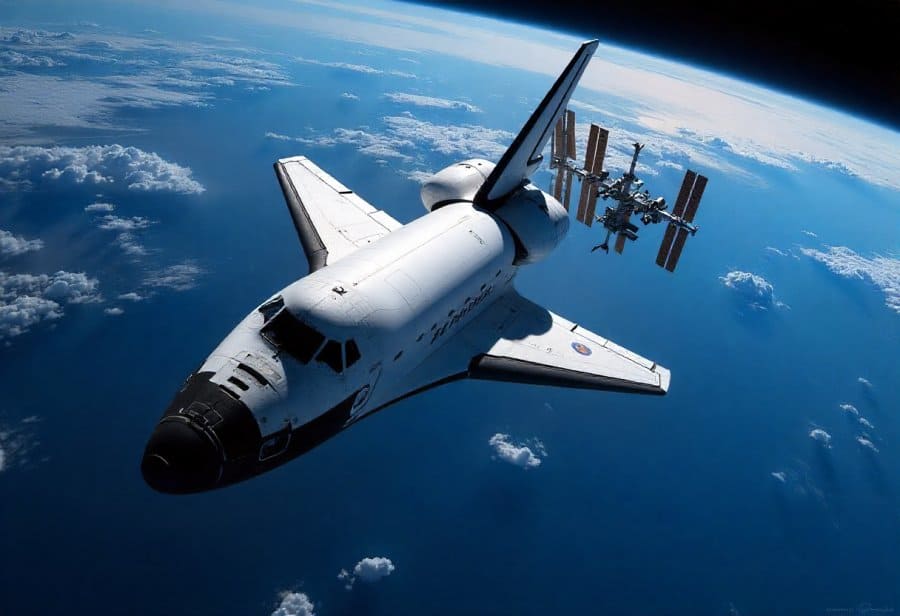
From Innovation to Inspiration: How Atlantis’s Last Flight Shapes Future Space Exploration
The achievements of Atlantis’s final flight continue to influence space exploration in practical ways, shaping current technology and operational standards. Its successful deployment of advanced systems, especially the robotic arm and cargo transfer procedures, set new benchmarks for spacecraft efficiency and safety. These innovations have been integrated into newer spacecraft and missions, leading to safer, more precise operations that are critical for complex tasks like station assembly and resupply missions.
The emphasis on safety protocols and international cooperation during Atlantis’s last mission offers a blueprint for future endeavors. The rigorous safety standards and collaborative approaches demonstrated during that flight have become integral to planning projects like NASA’s Artemis program and upcoming Mars missions. These principles foster trust among international partners and help mitigate risks associated with deep space exploration, ensuring that crewed missions are both feasible and sustainable.
Atlantis’s longevity in service exemplifies resilience and adaptability—traits that remain vital in space exploration today. Its decades-long career, marked by technological upgrades and evolving mission goals, shows how continuous learning and flexibility can turn challenges into opportunities. This mindset encourages current space agencies to embrace innovation and remain open to new ideas, even when faced with setbacks, fostering a culture of progress that persists beyond the shuttle era.
Logistics and resource management during Atlantis’s final mission also offer valuable lessons. Carrying over 30,000 pounds of supplies, scientific instruments, and spare parts, the mission highlighted the importance of meticulous planning and real-time coordination. These experiences have driven improvements in cargo systems and supply chain management, laying the groundwork for sustainable human presence beyond Earth, whether on lunar bases or future Mars colonies.
Technological advancements showcased during Atlantis’s last journey continue to shape spacecraft design. Reusable components, streamlined cargo handling, and robotic operations are now standard features of next-generation vehicles. These innovations aim to reduce costs, increase mission frequency, and enhance safety—goals that are central to the broader shift toward sustainable and accessible space exploration. The lessons learned from Atlantis have helped accelerate this transition, making space more reachable for a wider range of missions and organizations.
Furthermore, Atlantis’s mission underscored the importance of international collaboration in achieving complex objectives. The shuttle’s success depended heavily on partnerships across countries and agencies, fostering a spirit of shared purpose. This approach has become a model for future international projects, emphasizing that pooling resources, expertise, and technology is essential for overcoming the immense challenges of deep space exploration and establishing long-term human presence beyond Earth.
The legacy of Atlantis’s final flight also inspires resilience and innovation in the face of setbacks. Its career demonstrated how continuous improvement, driven by technological upgrades and safety enhancements, can turn obstacles into stepping stones. This resilience encourages current programs to stay flexible, embracing new ideas and technologies even amid unforeseen challenges, ensuring progress remains steady and purposeful as exploration extends further into the cosmos.

Looking Ahead: Lessons from Atlantis’s Legacy Drive the Future of Human Space Travel
The final mission of Atlantis offers a powerful reminder of what human resilience and curiosity can achieve. Over nearly three decades, this shuttle supported vital scientific research, helped build and maintain the International Space Station, and became a symbol of progress, teamwork, and innovation. Its story demonstrates that sustained effort, technological progress, and international collaboration can push the boundaries of exploration and deliver extraordinary results. Reflecting on Atlantis’s legacy, it’s clear that its journey is more than just a chapter in space history—it provides a blueprint for the future of discovery and exploration.
One of the most important lessons from Atlantis’s last flight is how technological advancements can make space missions safer, more efficient, and more sustainable. The innovations showcased during its final journey—like advanced cargo handling, robotic operations, and upgraded safety protocols—have laid the groundwork for next-generation spacecraft and habitats. These developments are not only reducing risks but also making space exploration more accessible and cost-effective, opening the door for broader participation and more ambitious missions beyond low Earth orbit. The shuttle’s legacy of innovation continues to influence the design and operation of newer spacecraft.
Beyond technology, Atlantis’s final mission underscored the vital importance of international cooperation. Its success depended heavily on collaboration among NASA, international partners, and private industry. This collective effort fostered a shared sense of purpose, trust, and mutual benefit that remains central to current and future exploration initiatives. As we look toward lunar bases, Mars missions, and beyond, the principles demonstrated during Atlantis’s last flight—strong partnerships, rigorous safety standards, and a common goal—are guiding us. Such cooperation is essential for overcoming the immense challenges of deep space travel and establishing a sustainable human presence elsewhere.
Resilience and adaptability stand out as core themes from Atlantis’s career. The shuttle faced setbacks—from technical issues to safety concerns following the Challenger disaster—but its ability to learn, improve, and evolve was crucial. Each mission brought new tools, safety features, and operational techniques, reflecting a culture committed to growth. This mindset encourages current space programs to stay flexible, embrace innovation, and turn challenges into opportunities. Atlantis’s story reminds us that perseverance and a willingness to adapt are vital for pushing further into the unknown and making new discoveries.
Looking ahead, the legacy of Atlantis’s final voyage fuels a future built on innovation, collaboration, and perseverance. Its achievements continue to influence how new technologies are developed, how international partnerships are formed, and how the next generation of explorers is inspired. As private companies take on larger roles in spaceflight, the foundation laid by Atlantis’s missions ensures that exploration becomes more sustainable, accessible, and ambitious. The lessons learned from its long service remind us that progress depends on a shared vision, resilience in the face of setbacks, and an unwavering commitment to exploring what lies beyond our world.
As we look to the future, understanding the impact of the shuttle program’s end on NASA and space exploration is crucial for shaping ongoing and upcoming missions. The legacy of Atlantis within NASA’s shuttle program history continues to inspire new generations of scientists and engineers, highlighting the enduring significance of its contributions to human spaceflight.